Curtains That Actually Work: How to Stop Glare, Gain Privacy, and Make a Room Feel Softer
Curtains aren’t just decoration. Learn how the right fabric, length, and hanging height can cut glare, improve privacy, and make your room feel calmer.
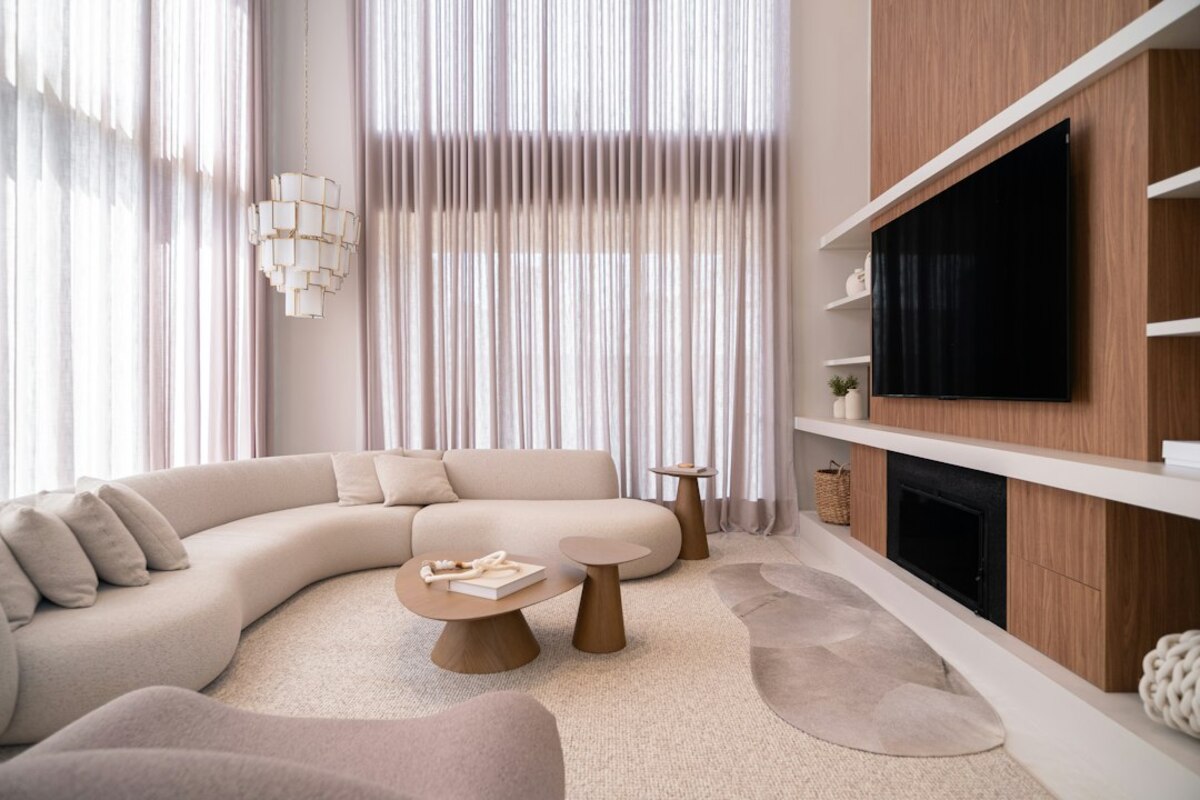
- Hang curtains higher and wider than the window to make the room feel larger and block more light.
- Match fabric to the job: sheers for daytime softness, lined curtains for privacy and light control.
- A few measurements (rod width, drop length, fullness) prevent the most common “why does this look wrong?” mistakes.
Why curtains feel “mysteriously wrong” (and how to spot the real problem)
You know the feeling: you buy curtains that look great online, you hang them up, and… the room still feels unfinished. Or the glare is still annoying at 4 p.m. Or you can’t sit on the couch without feeling like the neighbors can see your entire life.
Most of the time, the issue isn’t your taste. It’s that curtains are doing multiple jobs at once, and the product you bought was designed to do only one.
Think of curtains like shoes. Flip-flops are fine for the beach, but you wouldn’t wear them on a rainy hike. In the same way, sheer panels can look lovely, but they won’t handle streetlight glare at night. Heavy velvet can look dramatic, but it might make a small room feel darker than you want.
Before you pick fabric or color, figure out what problem you’re solving. In everyday homes, curtain “jobs” usually fall into four buckets:
- Glare control: cutting that sharp sunlight that bounces off screens, floors, or shiny tables.
- Privacy: stopping silhouettes at night and reducing how much people can see in.
- Softening the room: reducing the hard, echo-y feeling that comes from lots of bare surfaces.
- Temperature comfort: making a window feel less drafty in winter or less like a heat lamp in summer.
A quick real-life scenario: imagine a living room with a TV opposite a bright window. You hang pretty sheers because you want it “airy.” At 5 p.m., the show is unwatchable because the window is a spotlight. You close the sheers, but they only diffuse the light, not block it. Result: you think you need a new TV. You don’t. You need curtains designed for glare control (usually lined or heavier fabric) or a layered setup.
Another scenario: you love the look of dark curtains, but the room feels smaller and gloomier than before. What happened? A dense, dark fabric absorbs light. That can be cozy—great for bedrooms—but in a small north-facing living room it can feel like you turned down the dimmer switch permanently.

Choose the right “curtain system”: sheer, lined, blackout, or layered
Instead of asking, “What curtains should I buy?” ask, “What system fits this room?” Curtains work best when you treat them like a simple tool kit.
Here’s a practical guide to common options:
| Type | What it’s best at | What to watch for | Great for |
|---|---|---|---|
| Sheer panels | Soft daylight, gentle privacy in daytime | At night they can turn your room into a lantern (silhouettes show) | Living rooms that need brightness; apartments where you want “light but not fishbowl” |
| Unlined drapes | Style, mild glare reduction | Privacy depends on fabric density and backlighting | Rooms that already have blinds/shades and just need softness |
| Lined drapes | Privacy, glare control, better drape | Heavier; needs a sturdier rod and better hardware | Street-facing windows; TV rooms; bedrooms that aren’t fully dark |
| Blackout curtains | Maximum light blocking, sleep support | “Blackout” varies by brand; light leaks around edges if hung narrowly | Bedrooms, nurseries, shift workers, rooms with bright streetlights |
| Layered (sheer + drape) | Flexible: bright in day, private at night | Costs more; needs double rod or track | Most multipurpose spaces (living/dining/home office) |
If you’re unsure, layering is the “most likely to succeed” option because it lets you adjust the room rather than locking you into one mood. A typical setup is:
- Sheer layer: stays closed during the day to soften light and reduce that “on display” feeling.
- Drape layer: closes at night for privacy, glare control, and comfort.
About privacy (the part people underestimate): Many fabrics look opaque in a store but become see-through when the room is lit and it’s dark outside. A simple test is to hold the fabric up and shine your phone flashlight from behind. If you can clearly see shapes and colors through it, you’ll likely get silhouettes at night unless you add lining or a second layer.
About glare (the part people blame on screens): Diffusing light isn’t the same as blocking it. Sheers scatter sunlight, which can still wash out a screen. Lined curtains reduce brightness more effectively, especially if they overlap the window edges.
About “softness”: Curtains add visual and acoustic softness. If a room feels a little echo-y—hard floors, bare walls, minimal textiles—curtains can help the space feel less sharp. You don’t need thick theater drapes to get that effect; even medium-weight fabric adds a layer of calm.
The hanging rules that change everything (height, width, length, and fullness)
Even perfect fabric can look off if the curtains are installed in the most common “default” way: a rod placed right on top of the window frame, panels that barely reach the sill, and not enough fabric to look intentional.
These four variables do most of the heavy lifting:
- Height: how high above the window you place the rod
- Width: how far past the window the rod extends
- Length: where the curtain ends (sill, below sill, floor)
- Fullness: how much fabric you use across the rod
A “safe” everyday formula that works in most rooms
- Hang high: place the rod 4–8 inches above the window frame, or closer to the ceiling if you want height (leave a small gap so it doesn’t look cramped).
- Hang wide: extend the rod 8–12 inches past each side of the window (more if the wall space allows).
- Go long: aim for curtains that end just above the floor (about 1/2 inch) for a clean look.
- Add fullness: total curtain width should be about 1.5–2× the rod width for a comfortable, not-flat look.
Why these rules work is surprisingly simple:
Hanging high makes the window feel taller, so the room feels taller. It’s the same trick as wearing high-waisted pants—your eye reads longer lines.
Hanging wide lets the panels stack mostly on the wall when open instead of covering glass. That gives you more daylight and makes the window look larger. It also reduces light leaks because the fabric overlaps the window edges when closed.
Going long makes the curtains look like part of the architecture rather than an afterthought. Short curtains often read as “temporary” unless you’re intentionally doing café curtains or a specific style.
Adding fullness prevents that flat-bed-sheet look. Curtains are meant to have folds; folds create depth, and depth reads as “finished.”
Quick measurement cheat sheet
| You need to measure… | How to measure | What you’ll use it for |
|---|---|---|
| Rod width | From rod end to rod end (finial to finial if they’re fixed) | Calculating curtain fullness (how many panels) |
| Drop length | From the top of the rod (or rings/clips) down to your desired endpoint | Choosing 84/96/108 inch panels or custom length |
| Stackback space | Wall space beside the window where curtains can rest when open | Deciding how wide to extend the rod for maximum light |
Common mistake #1: not enough panels. Many sets come as two narrow panels that look fine in packaging but barely cover a standard window with any fullness. If your curtains look stretched, you likely need more width, not a different color.
Common mistake #2: a weak rod. Lined or blackout curtains are heavier than you think. A sagging rod instantly makes a room feel tired. If you can, use a center support bracket (especially for wide spans) and wall anchors appropriate for your wall type.
Common mistake #3: the “puddle” that becomes a dust mop. A small puddle can look romantic in photos, but in everyday life it collects dust and gets stepped on—especially in homes with pets, kids, or radiators near windows. A near-floor length is usually the most livable.
Mini-scenarios: picking the right setup fast
- Home office with video calls: You want daylight but hate squinting. Try a sheer layer for daytime + lined drape for glare. Hang wide so the open curtain doesn’t steal your light.
- Bedroom facing streetlights: Go blackout, but focus on width and overlap to reduce edge glow. Consider layering sheers if you still want soft daylight during mornings.
- Ground-floor apartment: Daytime privacy matters. Sheers are your friend during the day, but add lined curtains for nights. This prevents the “aquarium effect.”
If you choose a layered curtain setup (sheer + lined/blackout), you often can skip blinds. If you want very precise light control (tilting slats) or you need a super-clean window look, blinds/shades plus decorative curtains can be a good combo.
If you choose a layered curtain setup (sheer + lined/blackout), you often can skip blinds. If you want very precise light control (tilting slats) or you need a super-clean window look, blinds/shades plus decorative curtains can be a good combo.
Raise and widen the rod. It changes the entire proportion of the room and improves light control without buying new fabric. If privacy is the issue, add clip-in liners or swap to a lined version of the same style.
Raise and widen the rod. It changes the entire proportion of the room and improves light control without buying new fabric. If privacy is the issue, add clip-in liners or swap to a lined version of the same style.
Hang them as soon as possible so gravity can help. Use a steamer (often easier than ironing long panels). If you’re using clips, keep the clip spacing even so the top edge doesn’t wave.
Hang them as soon as possible so gravity can help. Use a steamer (often easier than ironing long panels). If you’re using clips, keep the clip spacing even so the top edge doesn’t wave.
One last way to think about it: curtains are the “frame” around your view and your light. When the frame is the right size and the right material, the whole room feels calmer—like it finally makes sense.