Why Your Phone Cable Keeps Failing (and the 5-Minute Fix That Makes It Last)
Frayed charging cables aren’t “bad luck.” Learn the everyday habits that break them, plus a quick reinforcement trick to extend cable life.
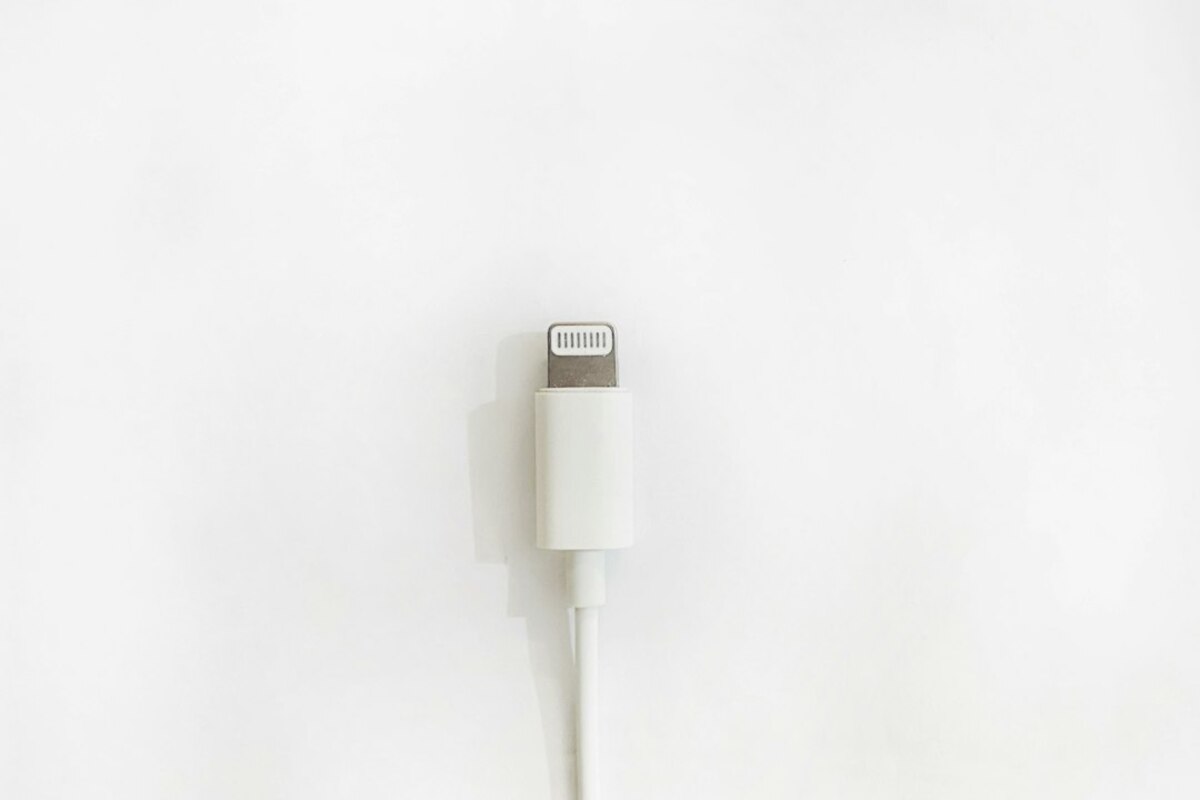
- Most cable failures start at the connector from bending, yanking, and tight angles—not from the wire “wearing out.”
- A few small habit changes (strain relief, gentle unplugging, looser routing) can double or triple cable lifespan.
- A simple 5-minute reinforcement using heat-shrink or a spring/coil can prevent fraying where it usually begins.
What’s actually breaking inside your charging cable
It usually starts the same way: your phone only charges if you “hold the cable just right,” or it disconnects the moment you bump the table. From the outside, the cable might look fine—maybe a tiny crack near the plug, maybe nothing at all. Inside, though, a lot is going on in a very small space.
Think of a charging cable like a tiny rope made of even tinier strands. Most cables contain multiple very thin copper conductors (for power and data), wrapped in insulation, then bundled and covered with an outer jacket. Near the connector (the part that plugs into your phone), those strands transition from flexible wire to a rigid plug housing. That transition zone is where the cable takes the most abuse.
Every time you bend a cable sharply at the plug, you’re forcing those copper strands to flex right at the point where they can’t “spread the bend out.” Over time, strands begin to fatigue—similar to how a paperclip snaps if you bend it back and forth in the same spot. At first only a few strands break, so the cable works intermittently. Later, more strands fail and charging becomes unreliable.
On top of bending fatigue, there are two other common issues:
- Strain from pulling: Unplugging by yanking the cord instead of gripping the plug slowly loosens internal solder joints and stretches conductors.
- Twisting and pinching: Cables trapped under chair legs, bent around tight corners, or wrapped tightly around a charger create kinks that become weak points.
If you’ve ever wondered why the “same brand” cable can last you two years while another dies in a month, the difference is often not the cable—it’s the daily routine: how it’s routed, how it’s unplugged, and how much stress that connector area takes.

The everyday habits that quietly destroy cables (and what to do instead)
You don’t need to baby your electronics to keep cables alive. You just need to remove the repeated stress that happens in predictable moments—like charging in bed, charging in the car, or charging on the couch while scrolling.
Here are the biggest cable-killers and the small swaps that make a big difference:
| Habit that damages cables | What’s happening | Better (easy) alternative |
|---|---|---|
| Unplugging by pulling the cord | Stresses internal connections and stretches strands at the plug | Grip the connector housing and pull straight out |
| Charging with the phone hanging off the edge of a bed/sofa | The cable becomes a “lever” that bends at the connector | Rest phone on a surface; use a longer cable if needed |
| Sharp bends right at the connector (90° angle) | Repeated flexing in the same tiny spot causes copper fatigue | Leave a gentle loop (like a wide “U”) near the plug |
| Using the phone while charging with the cable pulled tight | Constant micro-bending and twisting at the connector | Create slack; route cable so it doesn’t tug when you move |
| Wrapping cables tightly around a power brick | Creates permanent kinks near the connector and wire memory | Coil loosely (palm-sized loops) and secure with a Velcro tie |
A quick real-life scenario makes this clearer: imagine charging your phone on the couch. The outlet is behind you, so the cable is stretched tight across the cushion. Every time you shift your body or pick up the phone, the connector is forced to tilt and twist. That’s a hundred tiny bends per evening—exactly the “paperclip problem.”
Two simple fixes: (1) use a longer cable so there’s slack, and (2) route the cable so it approaches the phone in a relaxed curve instead of a tight angle. This is less about being careful and more about setting up the cable so it can’t be stressed in the first place.
Also worth knowing: heat can speed up wear. If a cable is pinched under a laptop, pressed into a warm power adapter, or left in a hot car, the outer jacket can stiffen and crack sooner. That doesn’t mean you need to worry constantly—just avoid baking cables in hot spots when you can.
The 5-minute reinforcement that stops fraying at the connector
If your cable is already showing early fray near the connector, or you simply want new cables to last longer, reinforcement is the easiest maintenance win. You’re basically adding a better “strain relief” so bending stress spreads over a longer section of cable.
You can do this in a few ways, depending on what you have at home. The goal is the same: make the cable less likely to bend sharply right where it exits the connector housing.
Option A: Heat-shrink tubing (cleanest result)
- What you need: 1 piece of heat-shrink tubing (about 3–4 cm long), scissors, and a hair dryer or heat gun.
- Pick the size: The tubing must slide over the connector (or over the cable from the other end if the connector is too big). For many phone cables, a 3:1 shrink ratio is helpful.
- How to do it:
- Unplug the cable from power.
- Slide the tubing so it covers the weak zone: half on the connector housing and half on the cable jacket (or as much as fits).
- Warm it evenly until it shrinks snugly. Keep heat moving so you don’t overheat one spot.
This creates a firm sleeve that reduces sharp bends. Done right, it looks almost factory-made.
Option B: A spring or coil (surprisingly effective)
- What you need: A small spring (some people use a pen spring) or a flexible cable protector coil.
- How it works: The coil forces the cable to bend gradually over multiple turns instead of one tight hinge point.
- How to do it: Wrap or slide the coil so it starts at the connector and extends a few centimeters down the cable.
This is the “mechanical” version of strain relief. It’s not as sleek as heat-shrink but it’s fast and reusable.
Option C: Electrical tape + patience (works, but do it right)
- What you need: Electrical tape (or self-fusing silicone tape if you have it).
- How to do it: Start on the connector housing, overlap the tape by about half its width each wrap, and extend a few centimeters down the cable. Keep tension consistent.
Regular electrical tape can get sticky over time, especially in warm pockets or cars. Self-fusing silicone tape is cleaner and more durable because it bonds to itself rather than leaving glue behind.
Important note: If your cable is already exposing bare wire, reinforcement is not a “repair” so much as a temporary bandage. Exposed conductors can overheat, short, or simply stop working without warning. In that case, replace the cable and reinforce the new one from day one.
The phone end moves constantly: it’s in your hand, pocket, car cupholder, bed, and couch. The wall end usually sits still. More motion means more bending cycles, and bending cycles are what fatigue the strands near the connector.
The phone end moves constantly: it’s in your hand, pocket, car cupholder, bed, and couch. The wall end usually sits still. More motion means more bending cycles, and bending cycles are what fatigue the strands near the connector.
Often, yes—mainly because braided jackets resist abrasion and don’t crack as easily. But the connector area can still fail if the strain relief is short or stiff. A braided jacket is helpful, not magical.
Often, yes—mainly because braided jackets resist abrasion and don’t crack as easily. But the connector area can still fail if the strain relief is short or stiff. A braided jacket is helpful, not magical.
It’s not inherently bad, but it’s a common reason cables die early—because it adds constant tugging and bending at the connector. The fix is simple: give yourself slack and avoid tight angles at the plug.
It’s not inherently bad, but it’s a common reason cables die early—because it adds constant tugging and bending at the connector. The fix is simple: give yourself slack and avoid tight angles at the plug.
If you want to turn this into a “set it and forget it” routine, do one small maintenance pass the next time you plug in: check that the cable approaches your phone in a gentle curve, make sure there’s slack, and add reinforcement to your most-used cable. It’s one of those tiny upgrades that quietly saves money and annoyance every week.